ADVENTURE 004
A Pattern for Tomorrow
Ada Lovelace
A story about a frisbee, a sequence of instructions, and an idea that reaches farther than any machine yet built.
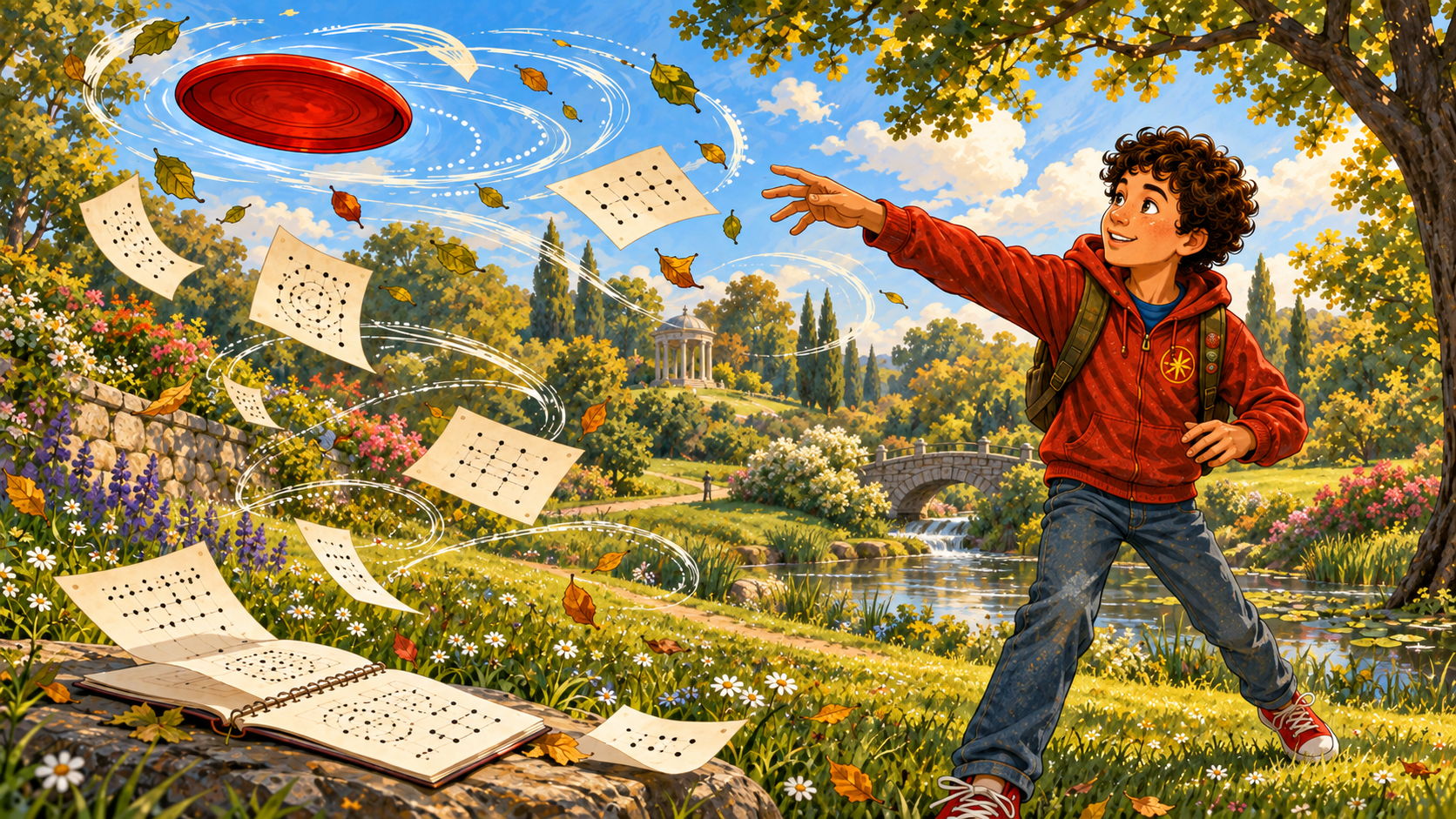
Rob had thrown a frisbee thousands of times. He could grip it, step, swing, release, and adjust the angle without thinking about any of those things separately. But when he tried to explain exactly how to do it, he discovered something strange. “Throw the frisbee” was not nearly as simple as it sounded.
Teacher Guides Coming in November
Grade-specific Teacher Guides for A Pattern for Tomorrow are coming in November, with connections to English Language Arts & Literature, Mathematics, Physical Education & Wellness, Science, and Social Studies.
Each guide will include two 30-minute learning sessions for each subject area, built around the questions, ideas, and discoveries in the Adventure.
Three Very Bad Instructions
Rob sat on the grass with his notebook balanced on one knee and his frisbee beside him.
At the top of the page, he had written:
HOW TO THROW A FRISBEE
Underneath were three instructions.
1. Hold the frisbee.
2. Step forward.
3. Throw it.
Rob read them over.
“That seems clear enough.”
He stood, picked up the frisbee, stepped forward, and threw. The disc sailed across the park exactly as he expected.
“Perfect.”
Then he looked back at the notebook.
Something bothered him.
Where should someone put their fingers? Which way should the frisbee face? And the last instruction — throw it — seemed to contain an awful lot of information for only two words.
Rob added one more line.
4. Catch it.
“That definitely helps.”
A breeze slipped across the grass and lifted the corner of his notebook. Rob pressed it down.
“I know what you’re thinking.”
The corner lifted again.
“You think these instructions are terrible.”
The Wind answered by sending the loose page tumbling across the grass.
Rob sighed.
“Apparently you have notes.”
The page spun upward. Another followed. Soon they were circling above him in a white spiral.
Rob grabbed his frisbee.
“Here we go.”
The park disappeared.
A Room Full of Ideas
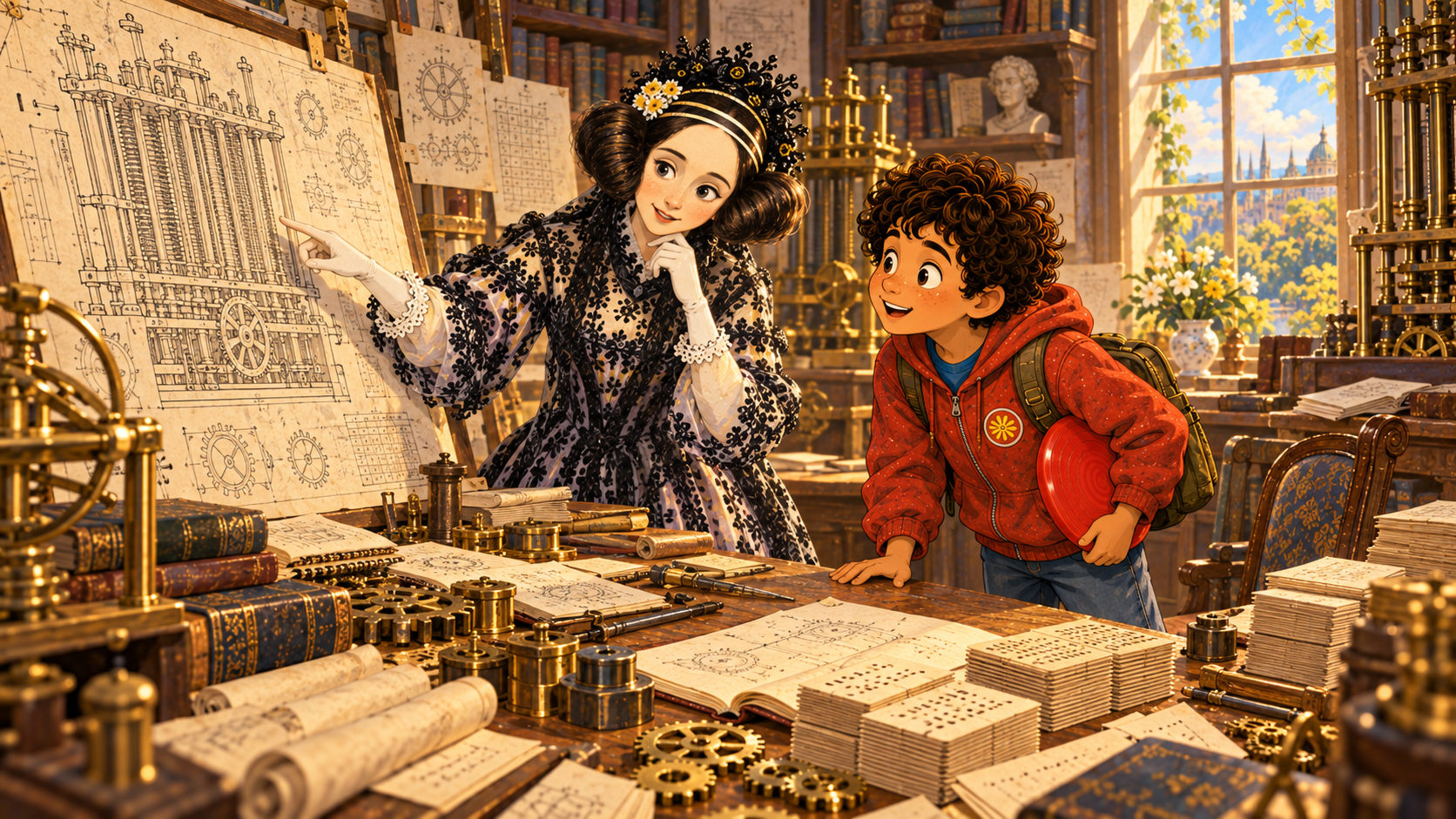
When the Wind settled, Rob found himself standing in a room crowded with gears, drawings, books, and sheets of paper covered in numbers and symbols.
There were mechanical parts scattered across one table and stacks of cards with small holes punched through them on another. Nothing looked quite finished, but everything looked as though it might become something.
A young woman stood beside an enormous drawing filled with wheels, columns, and carefully labelled parts.
Rob stepped closer.
“Is that a machine?”
She glanced at the drawing.
“Not yet.”
Rob waited.
She smiled.
“That is different from no.”
Rob liked that answer.
She picked up one of the punched cards.
“Machines can already use cards like these to follow patterns. A loom can use them to decide which threads should move.”
Rob examined the holes.
“So the card tells the machine what to do?”
“In a way.”
She looked toward the enormous plans.
“Charles Babbage has imagined something far more complicated — a machine that could follow instructions for working with numbers.”
Rob studied the maze of gears.
“So if you give it instructions, it follows them?”
“Yes.”
“Even if the instructions are bad?”
The woman smiled.
“Especially then.”
She held out her hand.
“Ada Lovelace.”
“Rob.”
Ada noticed the frisbee tucked beneath his arm.
“And what does that do?”
Rob looked at the disc.
“That depends how good my instructions are.”
A Machine Cannot Guess
Ada carried the frisbee into a garden behind the house.
“Teach me how to throw it,” she said.
Rob nodded.
“But do not show me.”
Rob paused.
“That seems unnecessarily difficult.”
“Good.”
Rob thought about his notebook.
“All right. Hold the frisbee flat.”
Ada turned the disc vertically.
Rob stared at it.
“That’s not flat.”
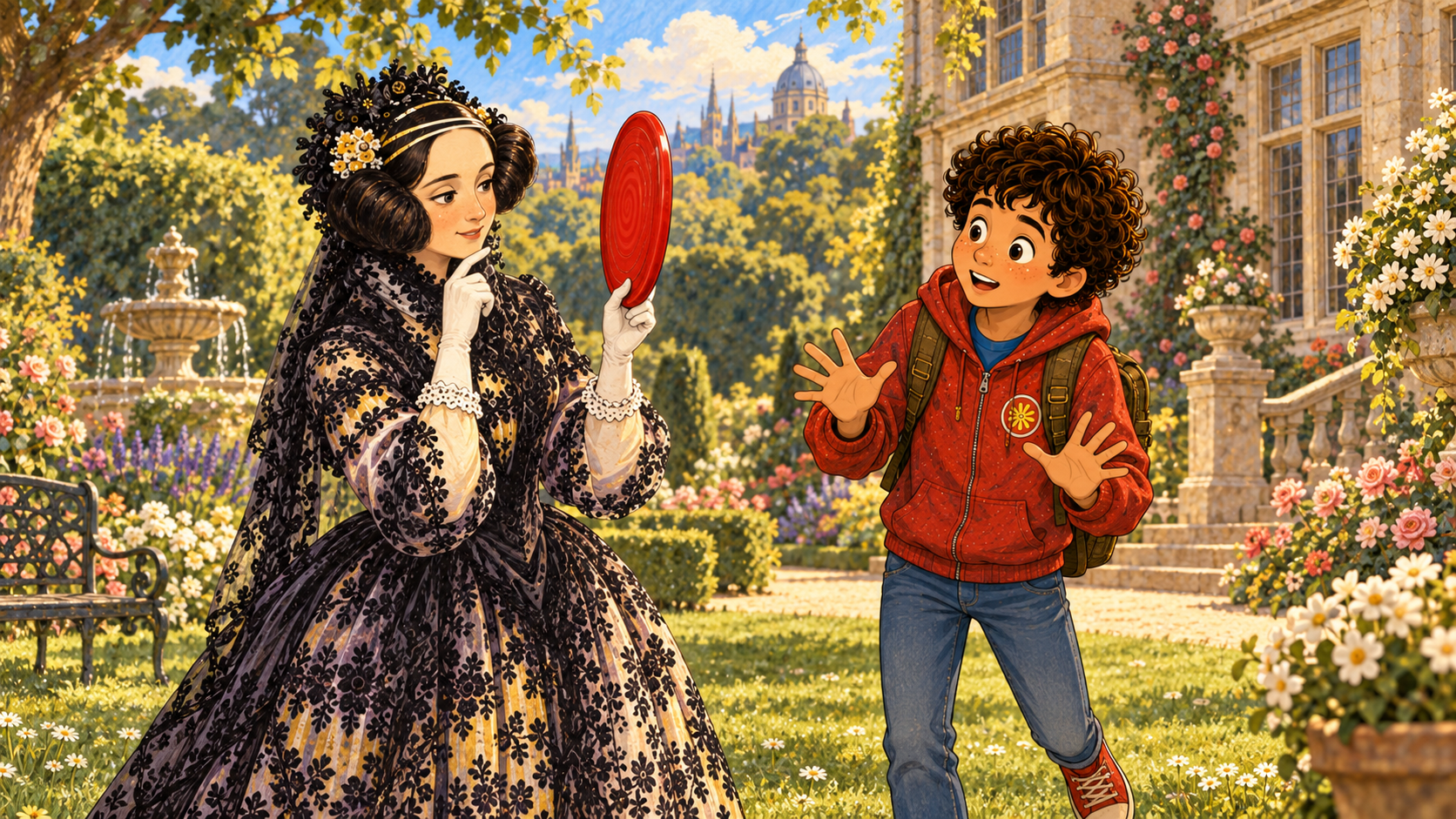
Ada examined the frisbee.
“It is quite flat.”
“It’s standing up.”
“You did not tell me which way the flat part should face.”
Rob opened his mouth, then closed it.
“Fine. Hold it flat like a plate.”
Ada corrected it.
“Now take a step forward.”
Ada took an enormous step and nearly lost her balance.
Rob burst out laughing.
“I didn’t mean that far.”
“How far?”
“A comfortable step.”
Ada raised an eyebrow.
“Machines are not especially good at understanding comfortable.”
Rob looked at her, then at the frisbee.
“Oh.”
Ada smiled.
“A machine cannot guess what you meant.”
Rob thought about the instructions he had written in the park.
Hold. Step. Throw.
“They really were terrible.”
“Not terrible,” Ada said. “Incomplete.”
Rob decided he liked that much better.
The Order Matters
Back inside, Ada found a stack of blank cards.
“Let us try again.”
They began breaking the throw into smaller pieces.
Rob wrote one instruction on each card:
GRIP.
ANGLE.
STEP.
SWING.
RELEASE.
WATCH.
Ada arranged them in a row across the table.
“That seems better,” Rob said.
“Let us find out.”
The Wind slipped through the open window and fluttered the cards. Neither of them noticed that RELEASE had moved in front of SWING.
Rob picked up the frisbee.
“I’ll follow them exactly.”
He gripped the disc, checked the angle, and stepped forward.
Ada looked at the next card.
“Release.”
Rob opened his hand.
The frisbee dropped directly onto his shoe.
Thunk.
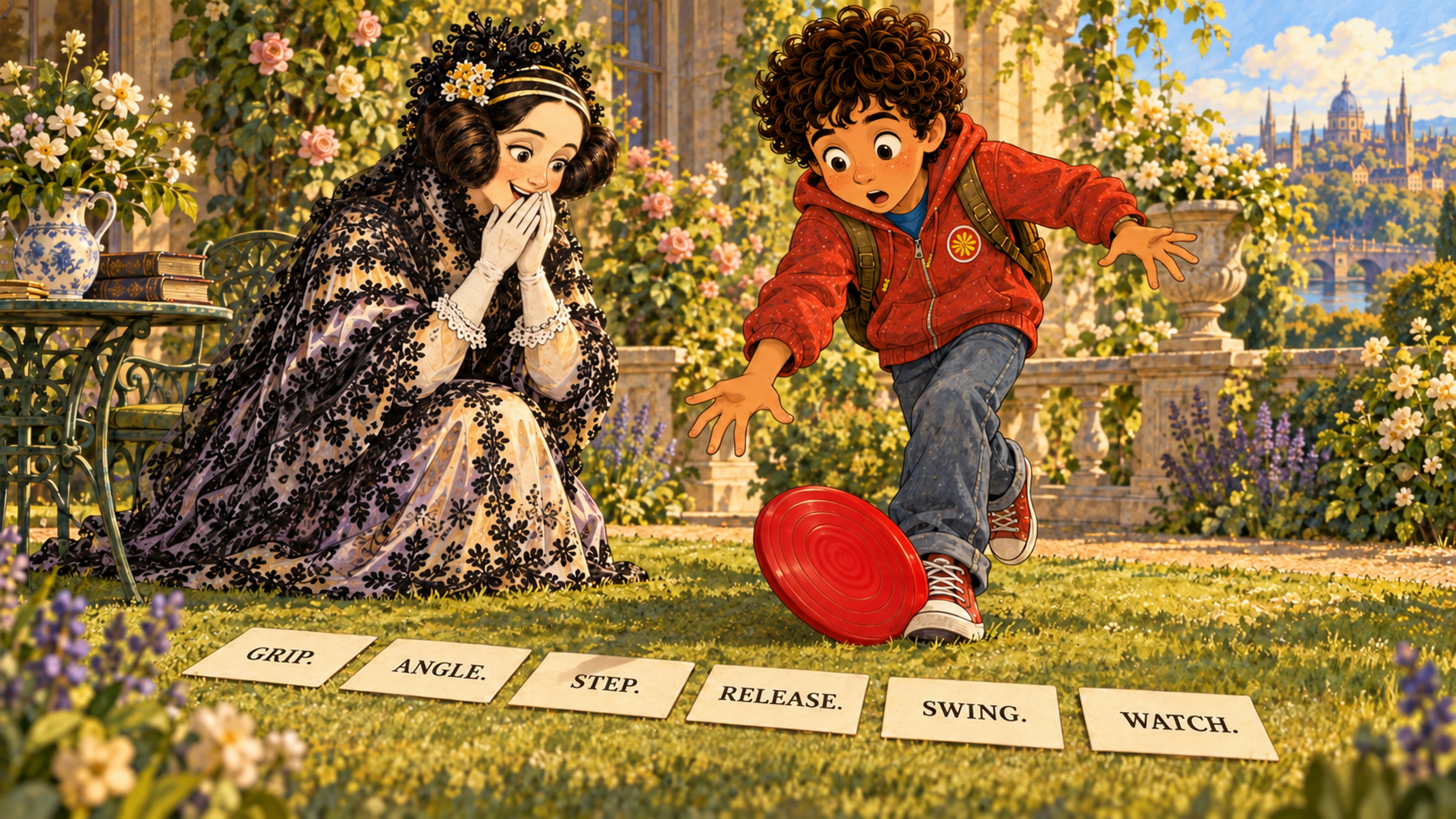
They stared at it.
“That did not go very far,” Rob said.
Ada picked up the card.
“The instructions were followed perfectly.”
“The instructions were wrong.”
“The order was wrong.”
Rob moved RELEASE behind SWING.
They tried again.
This time, Rob gripped the frisbee, checked the angle, stepped, swung, and released. The disc sailed across the garden.
Rob ran after it and caught it.
“The order matters.”
“Very much.”
Ada changed the sequence once more. This time, WATCH came before RELEASE.
Rob followed the instructions until he reached the new card, then stood staring at the frisbee in his hand.
After a moment, he looked at Ada.
“I can confirm that watching a frisbee you haven’t thrown is not especially exciting.”
Ada laughed.
They put the cards back in order.
Something Rob had always thought of as one smooth action was beginning to look very different.
A throw was not one thing.
It was a pattern made from many smaller things.
The Pattern Beneath the Throw
Ada picked up the WATCH card.
“What happens after you throw?”
“I see where the frisbee goes.”
“And then?”
“I change something.”
“What?”
Rob thought about his throws.
“If it turns over, I change the angle. If it flies too low, I adjust the release. If the Wind pushes it—”
A breeze rustled the papers beside them.
Rob glanced toward the window.
“—I definitely change something.”
Ada took another card and wrote:
ADJUST
She placed it beside WATCH.
“So you throw, you watch what happens, and then you adjust.”
“And throw again.”
Ada nodded.
Rob looked at the sequence.
THROW. WATCH. ADJUST. REPEAT.
He smiled.
“That’s basically practice.”
“Practice is full of patterns.”
Rob traced the cards with his finger.
He had followed that pattern thousands of times.
He had simply never noticed it was there.
Ada returned to the plans for Babbage’s machine.
Rob followed.
“So this machine would use patterns too?”
“Instructions,” Ada said. “Given in the right order.”
Rob looked at the punched cards.
“And if the order changes…”
“The result changes.”
Rob thought about the frisbee landing on his shoe.
“Definitely.”
More Than Numbers
Rob studied the machine drawings again.
“So it would follow instructions for numbers.”
“Yes.”
He shrugged.
“But numbers are just numbers.”
Ada tilted her head.
Rob was beginning to recognize that look. It usually meant his answer was about to become another question.
“What?”
Ada glanced toward a music box sitting on a shelf.
“Music has patterns.”
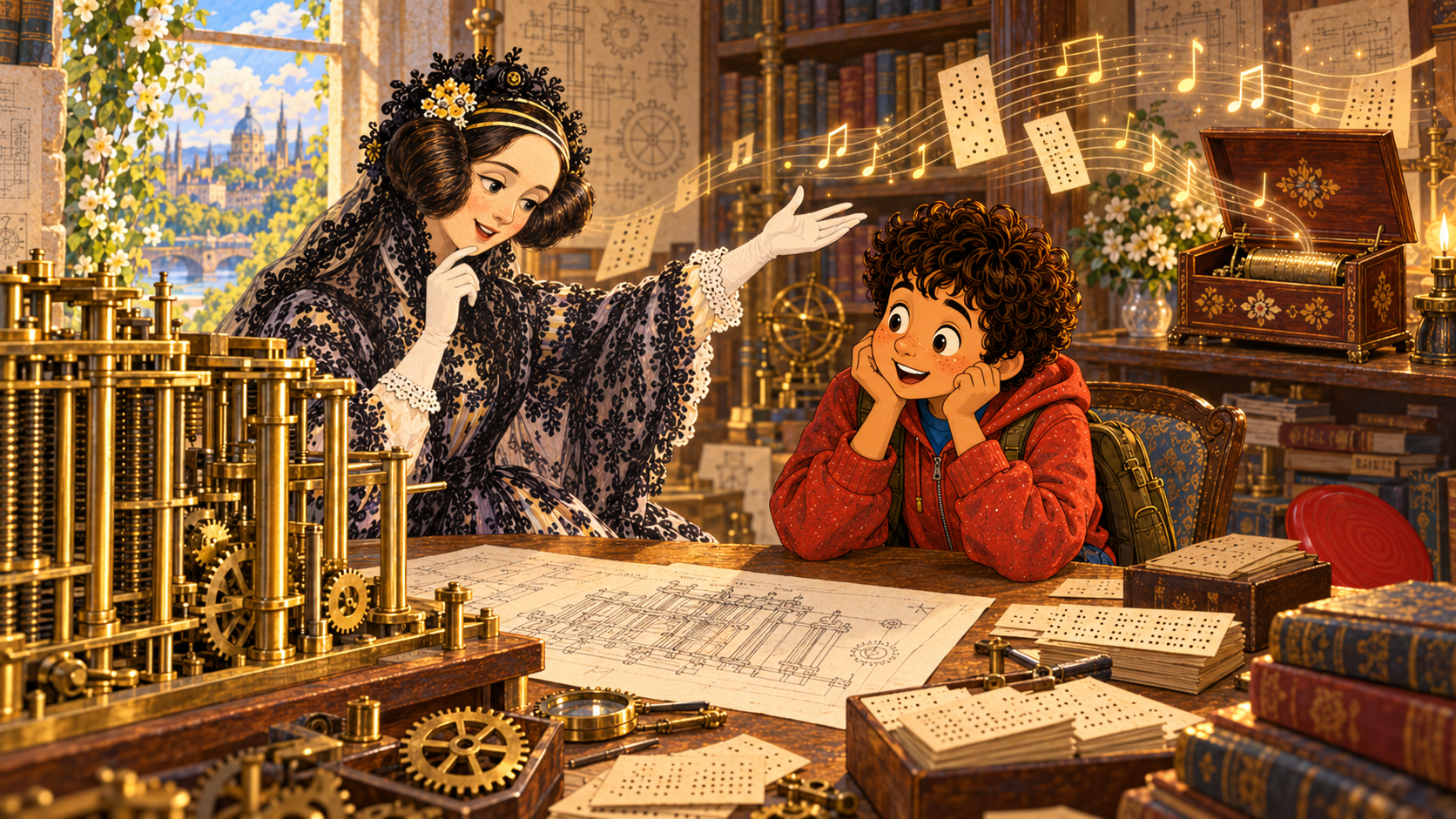
Rob followed her gaze.
“So do you mean numbers could represent notes?”
“Why not?”
“And then a machine could work with music?”
“Perhaps.”
Rob looked back at the unfinished machine.
Suddenly, the gears seemed less important than the idea behind them.
Ada wasn’t only imagining what a machine could do now.
She was thinking about what it might someday be able to do if someone could find the right instructions.
Rob smiled.
“You’re thinking pretty far ahead.”
Ada looked at the plans.
“Someone should.”
The Instruction Nobody Wrote
Later that afternoon, they carried the cards back into the garden.
Ada picked up the frisbee.
This time, Rob didn’t demonstrate anything. Together, they checked the sequence.
Grip.
Angle.
Step.
Swing.
Release.
Watch.
Ada threw.
The frisbee climbed too quickly, tilted, and landed in the grass.
Ada looked at Rob.
“I followed the instructions.”
“You did.”
“Then something is missing.”
Rob retrieved the frisbee and handed it back to her.
They looked at the cards.
“What?” Ada asked.
Rob turned the question over in his mind.
“I don’t know.”
Ada smiled.
“Excellent.”
Rob laughed.
“You really like not knowing things.”
“It leaves room to find out.”
Ada changed the angle of the frisbee slightly and tried again.
This throw flew farther and straighter before curving toward Rob.
He reached out with his right hand and caught it.
The Wind stirred around his fingers.
Ada looked up.
One by one, the cards began lifting from the grass.
GRIP. ANGLE. STEP. SWING. RELEASE. WATCH. ADJUST. REPEAT.
They circled higher in the Wind.
Then a blank card fluttered down between Rob and Ada.
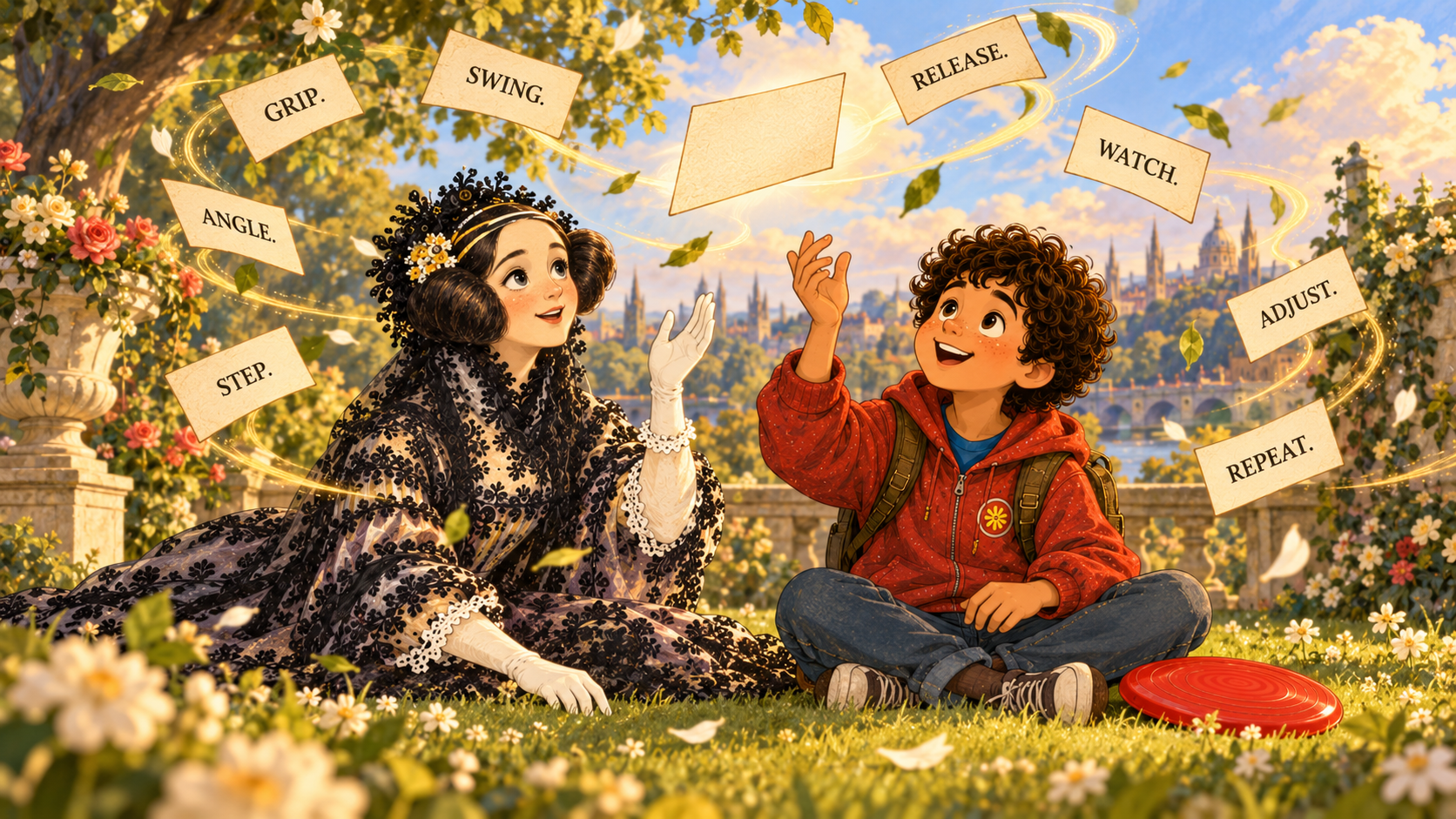
Ada picked it up.
“There appears to be one instruction missing.”
Rob looked at the empty card.
“What does it say?”
Ada handed it to him.
“Nothing yet.”
The Wind began to swirl harder.
Rob looked at the blank card.
Maybe something unfinished wasn’t always a problem.
Sometimes it was simply where the next idea began.
A Pattern for Tomorrow
When Rob returned to the park, his notebook was lying where he had left it.
His original instructions still filled the page:
Hold the frisbee.
Step forward.
Throw it.
Catch it.
Rob smiled and crossed them out.
Below them, he wrote:
Grip.
Angle.
Step.
Swing.
Release.
Watch.
Adjust.
Repeat.
It was better.
Still not perfect.
That didn’t bother him anymore.
Ada had imagined possibilities for a machine that had not even been built yet. She had looked beyond what it could do today and wondered what the right patterns might allow it to do tomorrow.
Rob closed the notebook and tucked it into his backpack.
Then he picked up the frisbee.
He gripped it, checked the angle, stepped, swung, and released.
The disc climbed into the sky.
To anyone watching, it looked like one simple throw.
Rob knew better now.
There was a pattern hiding inside it.
And somewhere beyond the patterns people already understood, another one was waiting to be discovered.
Keep wondering.
Your Turn to Wonder
The Adventure may be over, but the wondering doesn’t have to be.
Now it’s your turn to experiment.