ADVENTURE 010
The Stories Left Untold
John T. MacLeod
What helps someone keep going when the road ahead is hard and uncertain?

On a cold November afternoon, the Wind carries Rob back to the Second World War, where he discovers a chapter of his grandfather’s life he never truly knew. From a burning Spitfire to months as a prisoner of war and a dangerous journey home, Rob begins to understand what John T. MacLeod survived, and how that journey made possible the Christmases, card games, rounds of golf, and countless memories they would one day share.
Remembering Those Who Served
Every November 11, Canadians observe Remembrance Day to honour those who served during wars and conflicts, those who never returned, and those who came home carrying experiences that could stay with them for the rest of their lives.
During the Second World War, more than one million Canadians served in uniform. Some returned to build families, careers, and communities. Others never came home.
Remembering their service matters. But remembrance doesn’t have to mean asking veterans to relive what they endured. Some may want to share their experiences, while others may prefer to leave those memories behind.
We can honour both choices. Sometimes listening is important. Sometimes respecting someone’s silence is just as important. And sometimes, a simple thank you is enough.
A Throw Into the Wind
The November air was cold enough that Frisbee Rob could see his breath. Most of the leaves had fallen, and the Wind rattled the bare branches as he stepped into the park with his red frisbee.
“Well, at least one of us likes this weather,” he told the Wind.
Rob sent the frisbee into the breeze. It climbed, hovered, and drifted back toward him. He caught it, grinning.
“Now that’s a good return.”
He threw again, but this time the frisbee rose higher than he expected. The Wind caught it and carried it over the trees before bringing it gently back.
Rob watched the disc settle into his hand. He’d been thinking about another return journey, one that had taken place long before he was born.
A journey his grandfather almost never made.
Rob sat on a nearby bench and opened the pages he’d brought with him: photographs, newspaper notices, and notes about John T. MacLeod. He’d always known him as Grandpa, the man who loved family gatherings, cards, and golf. But there was a part of John’s life that nobody in the family was supposed to ask him about.
The war.
John hadn’t wanted to talk about it, and Rob had respected that. Only recently had he begun piecing together what happened through records and family stories. None could tell him everything, but each revealed another part of the man he’d known.
The Wind lifted the corner of a photograph, and Rob looked closer.
A Young Man Far From Home
The young man in the photograph looked nothing like the grandfather Rob remembered. He was only 22, wearing a military uniform, with nearly his whole life still ahead of him.
“Grandpa,” Rob said softly. “Look at you.”
John Thomas MacLeod was born in Westville, Nova Scotia, in 1921. On May 6, 1942, he enlisted in the Royal Canadian Air Force. By the summer of 1944, he was a fighter pilot serving with No. 417 Squadron in Italy.
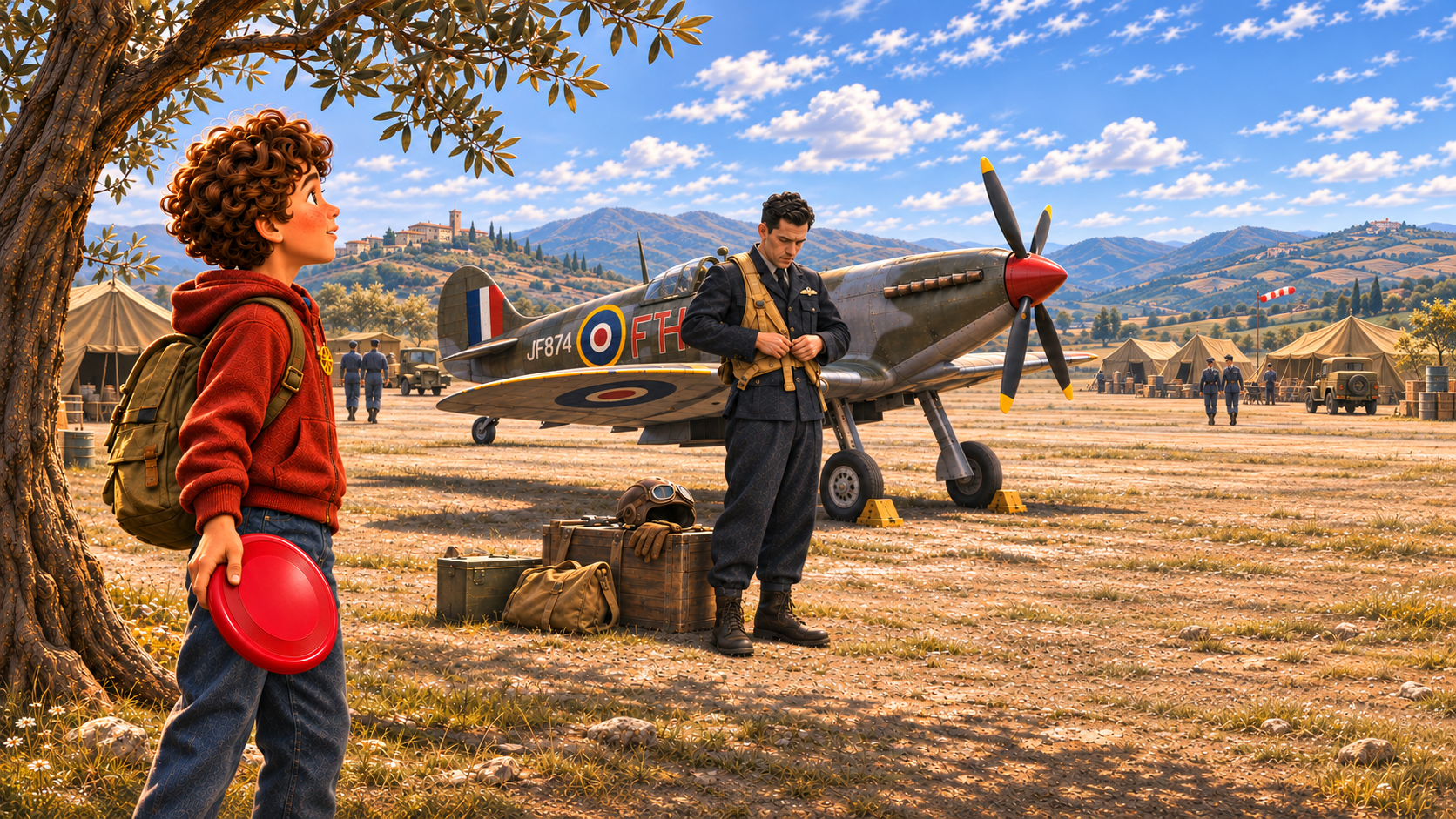
Rob had seen photographs of Spitfires before, but knowing his grandfather had flown one made the aircraft feel different. He imagined the roar of its engine, the rush of air over its wings, and a young pilot looking out across an unfamiliar country thousands of kilometres from home.
What had John been thinking before each flight? Was he afraid? Did he picture the people waiting for him in Nova Scotia?
Rob searched the records, but they couldn’t answer those questions. They could tell him what happened next.
The Flight That Didn’t Return
On July 26, 1944, John’s Spitfire failed to return from operations over Italy.
Rob read those words again. They were so short on the page, yet they marked a moment that could have changed everything.
His grandfather’s obituary told more of the story. John’s aircraft had caught fire, and he had escaped by parachuting from the burning Spitfire. The plane was lost, but John survived.

Rob glanced at his frisbee. He knew how the Wind could lift a disc and carry it through the sky, but he could hardly imagine depending on a parachute to save his life.
That escape made John a member of the Caterpillar Club, a group recognizing people who survived by parachuting from disabled aircraft. The unusual name came from the silkworm caterpillars that supplied silk for early parachutes.
The club’s motto stayed with Rob: Life depends on a silken thread.
One parachute had made the difference between life and death. Because it opened, there was a chance John might someday return home. But he wasn’t home yet.
After landing, John was captured and became a prisoner of war.
Behind the Wire
The Wind stirred the papers on the bench as Rob read about the months that followed. Somewhere far from Nova Scotia, his grandfather lived behind the boundaries of a prison camp, unable to decide where to go or when he might leave.
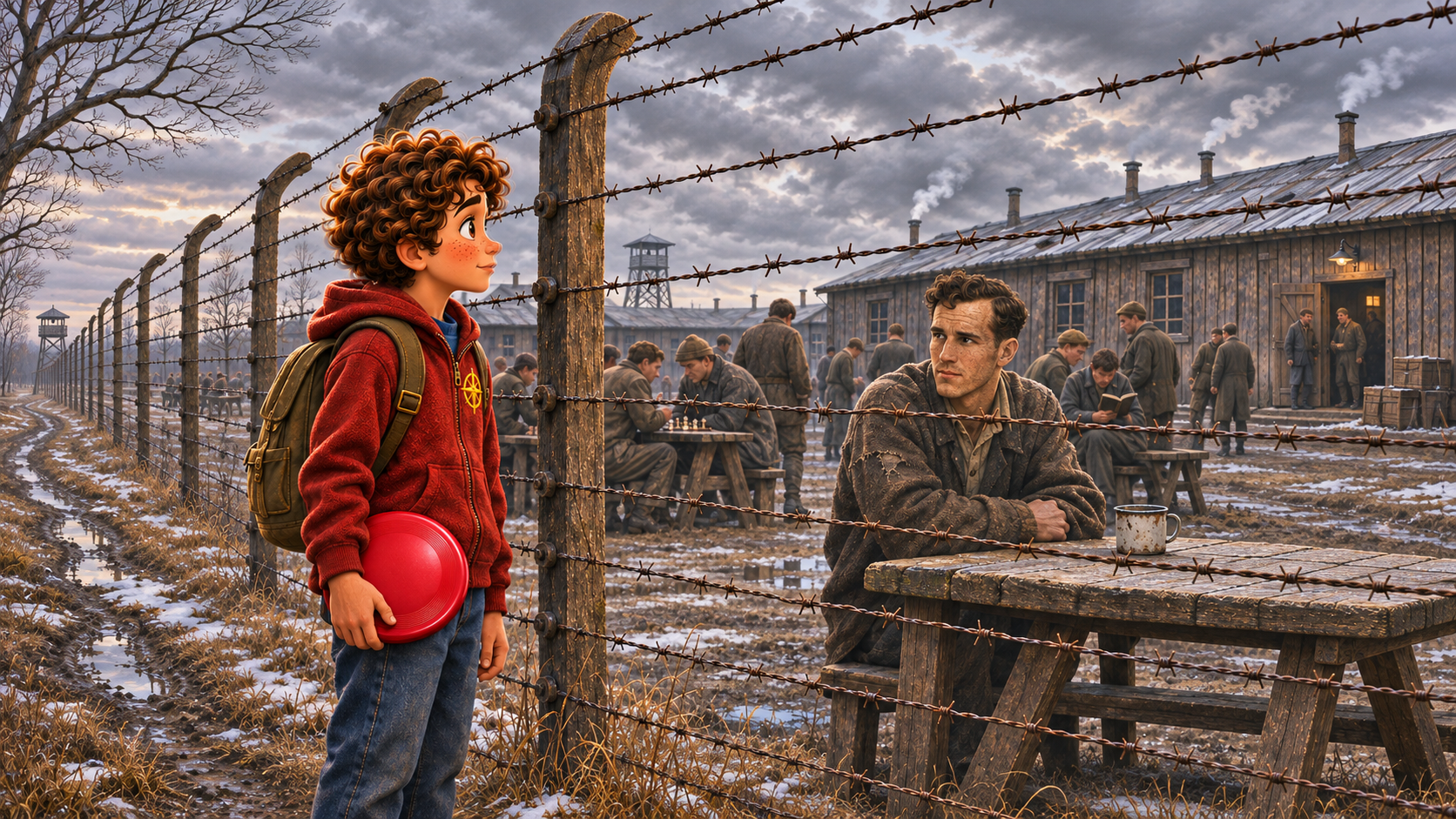
Rob tried to imagine losing such ordinary freedoms. No visits with friends. No afternoon at the park. No choosing when to go home.
And back in Westville, John’s parents were facing an uncertainty of their own. A newspaper notice reported that Pilot Officer John T. MacLeod was missing after air operations overseas. It did not tell his family that he had survived the burning aircraft.
Missing.
For a family waiting at home, that one word carried so many unanswered questions. Days passed, then weeks and months, without the answers they wanted. But according to the family story, John’s mother remained certain her son was alive. She believed he would come home.
Rob paused over the notice. He knew the ending now. John’s parents had not.
He wondered how John had lived with those months of uncertainty, but understood why his grandfather might never have wanted to revisit them. Knowing what happened was not the same as knowing how it felt. There were things the records could tell him and things they never could. And John had never owed anyone an account of his most painful memories.
Then Rob turned to the story of the winter march.
The March
In January 1945, as Allied forces advanced, German authorities began evacuating prisoner-of-war camps. Tens of thousands of prisoners were forced westward through the freezing European winter.
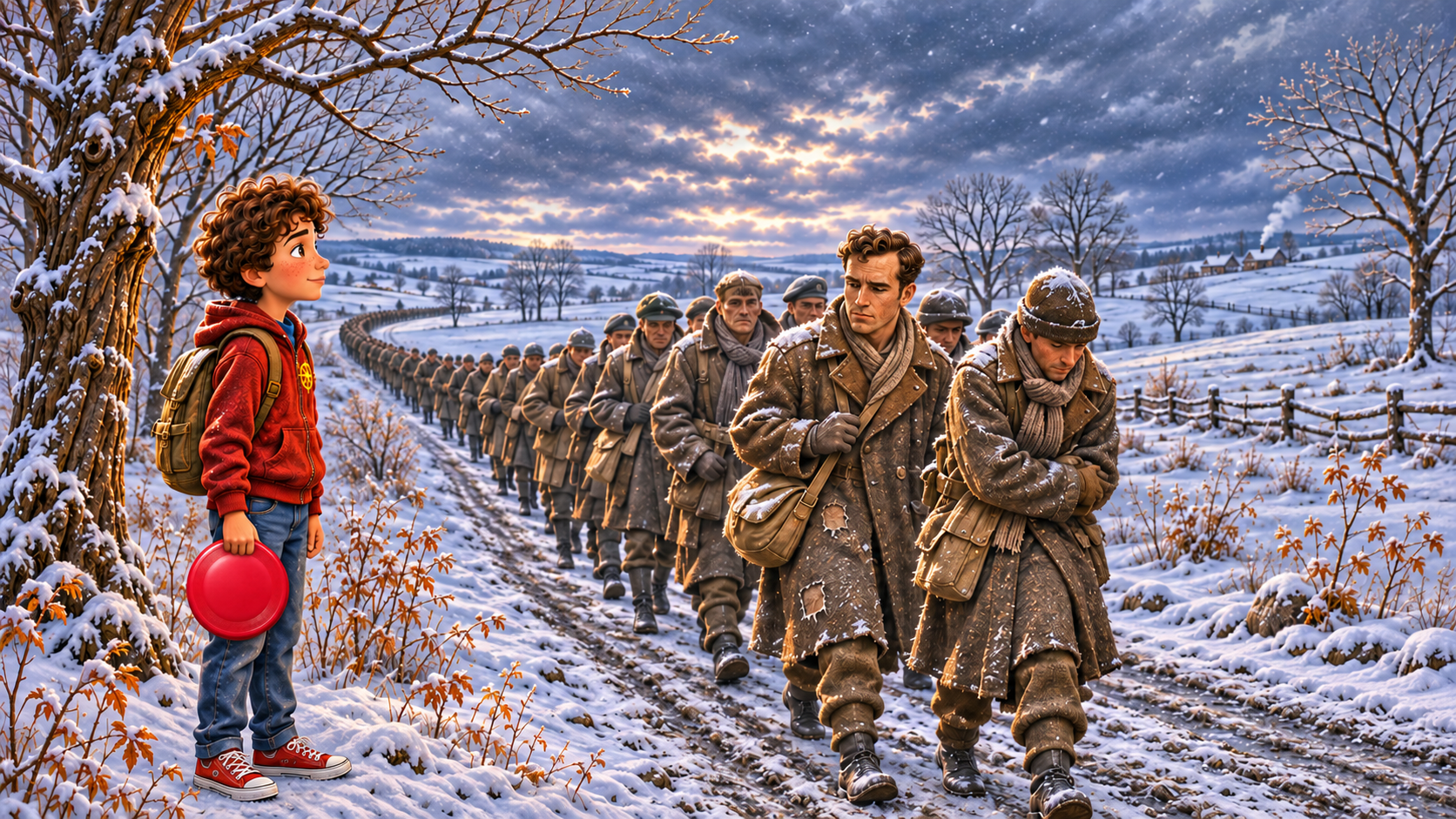
These journeys became known collectively as The March.
John’s obituary described a 21-day forced evacuation from Poland toward Germany.
Twenty-one days.
Rob looked across the park, where a cold gust pushed leaves over the path. He could go inside whenever he wanted, find a warm meal, and change into dry clothes. The prisoners on those roads had no such choices.
Many were already weak from captivity. Food was scarce, shelter was uncertain, and the cold could be dangerous. Some men never made it home.
Rob thought about the challenges he enjoyed: practising a difficult throw, walking farther, or trying again after a mistake. But this wasn’t a challenge anyone had chosen, and there was no trophy waiting at the end.
It was something people had been forced to endure.
One detail from the family story stood out to him. During the march, a police officer called out to John and the other prisoners: “Don’t give up, boys. You’re almost there.”
Rob read those words more than once.
They couldn’t make the cold disappear or shorten the road, but they reminded him that encouragement could reach someone even in terrible circumstances. He couldn’t know exactly how John felt when he heard them.
The records and family accounts could not tell him every step of the journey. They did tell him that John survived it. And eventually, he came home.
A Different Kind of Journey
The Wind softened. Rob turned to a photograph from later years and smiled. This was the Grandpa he recognized.
After the war, John returned to Canada. He continued his education, built a career in accounting and business, and married Jean Ward. Together they raised a family. His marriage to Jean lasted 61 years, and the family they built became the centre of countless moments Rob would one day treasure.
He was active in sports and his community, and in 2000 he was inducted into the Pictou County Sports Heritage Hall of Fame. Golf was one of his great loves. He played well into his eighties and recorded three holes-in-one.
Rob knew those things about his grandfather. He also knew the smaller moments that would never appear in a military record or an obituary.
Christmas visits. Summer afternoons. Sitting across from Grandpa at a card table. Walking together on a golf course.

Those weren’t just memories of what came after the war. They were the life his grandfather had come home to live.
For 26 years, Rob had known John as a grandfather, not as a young pilot or a prisoner of war. Only recently had he learned the details of what John had survived.
John died in 2008. Rob couldn’t ask him about those experiences now, but he hadn’t been supposed to ask when John was alive, either. The family had been told not to ask about the war, and they had respected that boundary.
Now, as Rob read, he began to understand why those memories might have been too painful to revisit.
He thought again of the Caterpillar Club’s motto: Life depends on a silken thread.
If that parachute had not saved John, there might have been no return to Nova Scotia, no marriage to Jean, no children or grandchildren, and none of the memories Rob treasured.
His grandfather’s life had been much more than the worst things that happened to him. And that, Rob realized, was an important part of the story too.
The Long Way Home
Rob gathered the photographs and folded the papers carefully. Around him, the park was still quiet, and the Wind moved gently through the almost-bare trees.
He thought about everyone who had served during the war. Some, like John, returned and built lives filled with people they loved. Others never came home, leaving families with stories and memories of their own.
Remembrance Day was about honouring those people. But Rob was beginning to see that remembering could be hard for the people who had lived through the war. Sometimes respecting their silence was part of honouring them, too.
Rob stood, holding the frisbee in his right hand. “You know, Wind, Grandpa never told us these stories.”
The branches rustled overhead.
“Maybe he just wanted to enjoy being home. I’m glad we got to do that together.”
He stepped onto the field and threw. The red frisbee climbed into the grey November sky, caught the breeze, and curved back toward him.

This time, as Rob reached for the catch, he thought about how much had depended on one young pilot finding his way home.
A name in a wartime record had become his grandfather, a family, and a lifetime of memories. Rob had only recently begun discovering the young man’s wartime story. But he’d been fortunate enough to know the man who came home.
As the disc settled into his hand, he thought of all the people whose stories might never be told, and all the ways we could still honour them.
Sometimes it was enough to say thank you. And one question stayed with him.
What stories are still waiting to be discovered about the people we love?
About John T. MacLeod
John T. MacLeod was born in Westville, Nova Scotia. He enlisted in the Royal Canadian Air Force on May 6, 1942, and served as a fighter pilot during the Second World War.
On July 26, 1944, while serving with No. 417 Squadron in Italy, his Supermarine Spitfire LF Mk VIII (JF874) failed to return from operations. He survived by parachuting from his burning aircraft but was captured and became a prisoner of war.
Back home in Westville, John’s parents, Mr. and Mrs. W. H. MacLeod, received word that their son had been reported missing after air operations overseas. A newspaper clipping preserved by the family documents the announcement. Months passed without news of his fate, but John’s mother remained convinced that her son was alive and would return home. She was right.
John spent months in captivity before enduring a 21-day forced evacuation from Poland toward Germany during the winter of 1945, part of what became known as The March. According to family recollections, during that difficult journey, a police officer offered the prisoners a few words of encouragement: “Don’t give up, boys. You’re almost there.”
Because his life had been saved by an emergency parachute escape, John became a member of the Caterpillar Club, an organization recognizing those who survived by parachuting from disabled aircraft. Its motto, “Life depends on a silken thread,” reflected just how much his survival had depended on that moment.
After returning to Canada, John pursued higher education at Dalhousie University and Mount Allison University and built a career in accounting and business. He was deeply involved in sports and community organizations and was inducted into the Pictou County Sports Heritage Hall of Fame in 2000.
An avid golfer, John continued playing well into his eighties, recording three holes-in-one during his lifetime. He also celebrated the golfing successes of his son John, daughter Debbie, and granddaughter Margo, sharing his love of the game across generations.
John and his wife Jean were married for 61 years. He died on April 21, 2008, at the age of 86.
John was Frisbee Rob’s grandfather. From 1982 until John’s passing in 2008, Rob shared many treasured memories with him, including family Christmases, summer visits, card games, and rounds of golf. Although Rob knew his grandfather well, he is still discovering the extraordinary experiences John lived through long before Rob was born.
John’s story is not only about surviving war, captivity, and a difficult journey home. It is also about the life he built afterward, the family he raised, the community he contributed to, and the generations whose lives became part of his remarkable story.
Historical Sources and Notes
This Adventure is a work of historical fiction inspired by documented events, historical records, preserved family materials, and personal recollections. Rob’s travels through time, the wartime scenes he observes, and his dialogue are fictional.
John’s service with No. 417 Squadron and the July 26, 1944, loss of Spitfire JF874 are documented in the CASPIR military aviation database. His published obituary provides details of his parachute escape, Caterpillar Club membership, 21-day forced march, and postwar life.
A surviving newspaper clipping, preserved by John’s family, confirms that his parents in Westville, Nova Scotia, received word that he had been reported missing following air operations overseas.
Additional family recollections describe the months John’s parents spent without news of his whereabouts, his mother’s unwavering belief that he was alive and would return home, and the words of encouragement offered by a police officer during The March: “Don’t give up, boys. You’re almost there.”
These family recollections have been included to preserve details passed down through the generations. While the historical records establish the major events of John’s wartime experiences, not every personal moment or conversation can be independently verified.
The Adventure honours both the documented history and the memories preserved by those who knew and loved John.
Historical references:
Keep Wondering
The adventure may be over, but your wondering is just getting started.